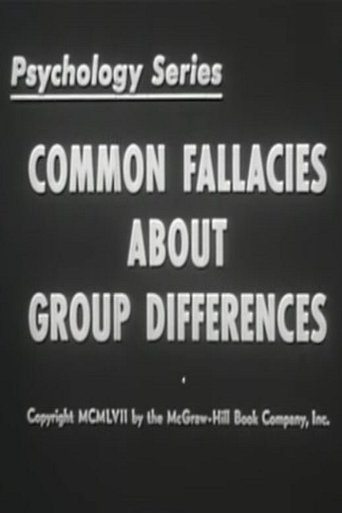
Common Fallacies About Group Differences (1957)
1957 · Ephemeral film · 14 min
Synopsis
Prompted by a discussion between painters sitting at lunch, this film analyzes seven common notions about races, heredity and group differences in the light of known scientific evidence, and proves them all wrong. Since it's situated on a college campus, the discussion benefits by the availability of modern audiovisual aids (an overhead projector) and attempts to delve under the surface of stereotype.
Synopsis from TMDb
Details
- Released
- 1957-01-01
- Running time
- 14 minutes
- Language
- English
- Collection
- Prelinger Archives
- Internet Archive item
- 1546CommonFallaciesAboutGroupDifferences
Subjects on the Internet Archive
- prejudice
Reviews on the Internet Archive
★★★★ · Nothing's Changed · Yowp · 2022-07-06
Prejudice and generalisations are attacked in a rather unusual way in this McGraw-Hill film which pulls one punch. The short endeavours to keep the viewer's interest with falling tarps, falling books, sentences that write themselves on a blackboard and working stiffs listening to an off-camera voice. This 1957 film predicts today. At the end, the painter accepts nothing and carries on with his pre-judging. So it is now. Logic and science is ignored in favour of hate and ridicule. The "anti" prejudice at the end is based on something the film never addresses: jingoistic America patriotism.…
★★★ · I'm Not Sure If I should Be Offended.. · Spuzz · 2022-08-19
Curious movie here about race and hereditry, and what almost leads up to bigotry. The film concentrates on debunking 5 myths about races and nationalities. The first one, right off the bat is “French is not a race” Whoo-eee! We also learn that “Not all Latin people are temperamental” and that other countries play other sports you may not be good at! So there! To prove their point, the film goes into the “5 known races” argument, including Mongoloid and Negroid.. I think I’m in the “everything else” category actually. So this is a fascinating study of what they thought was wrong then, and what…