Forgotten Village (1941)
1941 · Feature film · 65 min · dir. Herbert Kline
- Documentary
Synopsis
The Forgotten Village is a 1941 American docufiction film — some sources call it an ethnofiction film — directed by Herbert Kline and Alexander Hammid. Filmed in Mexico with local non-actors, it depicts life in a remote traditional pueblo where a folk healer comes into conflict with a teacher and outsiders who want to introduce modern medicine.
Synopsis from Wikipedia
Details
- Director
- Herbert Kline
- Writer
- John Steinbeck
- Composer
- Hanns Eisler
- Cinematography
- Alexander Hammid
- Released
- 1941-02-07
- Running time
- 65 minutes
Cast & crew
- Herbert Kline Director
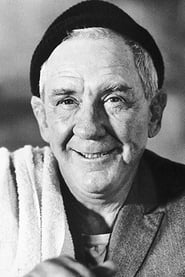 Burgess Meredith
Reviews on the Internet Archive
★★★★★ · Excellent · WINSTON SMITH3353 · 2012-11-05
Good print and sound. Sympathetic screenplay by John Steinbeck. He had a great love for the Mexican peasant. This film encouraged him to write and produce _The Pearl_ on the Gulf Coast of Mexico shortly afterwards. Burgess Meridith narration. Two wonderful old school progressives. Well preserved black & white tone and texture. Cinematography by Alexander Hackensmid taken from the original 35mm nitrate print. Angles, closeups, and rural scenery were caught with great sensitivity. I've never heard of Hackensmid until this viewing and he has the look I love in old B&W film. I will be looking for…
★★★★★ · Culture Clash Between Traditional and Modern Ways · Christine Hennig · 2004-08-22
This sensitively-done 30s documentary tells the story of Juan Diego, a young man who lives in a tiny Mexican village, where people live a traditional rural lifestyle that has changed little over thousands of years. The only link with the outside world is JuanÂs schoolteacher, who gives the village children a bit of knowledge of the modern world. When the children of JuanÂs village start sickening and dying in droves, Juan goes to his teacher for help. The teacher suspects that the village well is spreading an infectious disease, and he encourages Juan to go to a nearby city and get a public…
★★★★★ · Openly and unapologetically progressive · kinematos · 2009-08-05
This is a movie by John Steinbeck. It was filmed in 1941, in the mountains of Mexico. It has no actors, only real local people. With the exception of the village teacher, none of them had ever seen a movie. It is a good movie, but that is not the only reason why I recommend it. The other reason is that Steinbeck was of a kind one doesn't often meet today, in this age of cultural conservatism --- an overt and unapologetic progressive. This is an unusual and unfashionable movie.
★★★★★ · but is it a true account? · cashel · 2004-08-21
The critic,Richard Griffith, in his book"the film till now" has described this film as " an arty and unreal account of Mexican education and superstition". However I enjoyed this documentary film for its splendid b/w photography, narration and music. It is based on John Steinbeck,s book.
★ · Tradition Lost? · The Spanman · 2023-03-31
The Mexican peasantry have always been pawns in the FreeMasonic Republic of Mexico. Revolution and murder of their beloved village priests and the Christero movement, are the progressive’s answer. Trotsky was active in Mexico when he was prematurely dispatched from this world. John Steinbeck was within his element with Grapes of Wrath and Cannery Row, but sadly missed the boat on Mexican politics. This country has a rich culture and once had a beautiful devotion to God and His only begotten Son. The Virgin of Guadalupe is the patroness of the Mexican people. They have no use for Hollywood…